Sangeun Lee In Conversation
English National Ballet Lead Principal Dancer, Sangeun Lee, joins Gerald Dowler in conversation

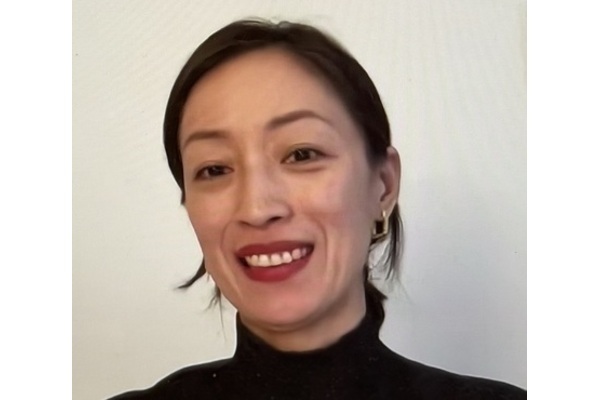
Sangeun Lee ‘in conversation’ with Gerald Dowler
13th April 2026
Susan Dalgetty Ezra, Chair of the London Ballet Circle, warmly welcomed Sangeun Lee to the evening’s conversation. Born in Seoul, she trained in South Korea and danced with Universal Ballet before joining Semperoper Ballett. She was promoted to Principal Dancer in 2015. Then in 2023 she moved to English National Ballet (ENB) as Lead Principal Dancer. The conversation this evening would be led by renowned dance writer and critic Gerald Dowler, who Susan also welcomed.
Gerald commenced by expressing his pleasure at the opportunity to talk with Sangeun, a marvellous dancer and a wonderful member of the ballet scene. He also revealed that she had been shortlisted for this year’s National Dance Awards. Sangeun responded that she was honoured to have been nominated, alongside other wonderful ballerinas.
Going back to the beginning, said Gerald, you're from Seoul and South Korea is an important centre of classical ballet. How did you get into that world? Sangeun responded that her mother had wanted her to do ‘something special’ and thus she had started learning piano at about age five, admitting that she still could not play a single song. Then gymnastic figure skating, which she did not have the patience to pursue. It was not until she got into a studio at around ten that she became fascinated with dance. She was taken to see Universal Ballet’s The Nutcracker and immediately decided that she wanted to be one of the Party Children.
Her mother had pushed her into the various activities – as is common in Korea – and for that she was very grateful. Gerald asked what had been different about ballet, to really inspire her as a ten-year-old. There was the music, she replied, and something to do with her body with which she really felt connected. Sangeun decided she wanted to go to a vocational school and so she moved into a different, more serious class for a year and then passed an audition for the Sunhwa Arts School.
What was the Sunhwa School ballet style, inquired Gerald, was it Vaganova? Broadly so, she replied, especially for its fine technique and concentration on port de bras. Year on year, however, they were encouraged to learn a range of styles. It proved to be really good preparation to enable her to graduate into Universal Ballett, a major company in South Korea.
In 2003 Sangeun went to compete in the Prix de Lausanne. Unfortunately, although already in Switzerland she was not allowed to participate, being told that she was too skinny. She had tests and scans, and all the results were normal but she ended up by crying most of the week. Still young, she had probably not completed her development although at 180cm, she was already very tall. Fortunately she knew that she would be able to return to the competition in her second year, in 2004.
The Prix, she said, had been an amazing experience, meeting so many young dancers from all round the world. The coaching sessions were terrific, citing in particular Monique Loudières who had shown her how to tell the story and how to work on the qualities of her short variation. Such an inspiring teacher! And how did things go for you, asked Gerald. In the final round she had slipped and fell on stage, so she hadn’t won but overall it had all been good.
When you go to the Prix you have to name those companies in which you might be interested, should you win. Sangeun had no idea where she might want to go but put down a name. With hindsight, however, she thinks that had she been successful and gone to that company she would not have continued dancing. It would not have worked out well!
At that time it was unusual for dancers from the school to go straight into the company; most went off to university to study for a diploma first. However, she opted to join the company immediately, thinking that work experience would make it easier to join a European company in due course. Universal Ballet was a big name in Korea under director Oleg Vinogradov, and the repertoire tended to the classical – Swan Lake, etc. Sometimes, however, Julia Moon, the other director of the company, would curate a contemporary programme; over the years these included, for instance, pieces by Christopher Wheeldon, Minus 16 created by Ohad Naharin, and William Forsythe’s ballet In the Middle, Somewhat Elevated.
Sangeun explained that because she was very tall finding a suitable partner could be quite a problem. The company had tried hard to do so, but few dancers were interested in moving to Korea. Thus she had danced many different solo roles, for instance, Mercedes in Don Quixote, the Lilac Fairy in Sleeping Beauty, or the Big Swans in Swan Lake. Not surprisingly, after three or four years she felt she wanted to expand her repertoire.
She was also interested in dancing more contemporary works and so decided to enter competitions and also apply for auditions, particularly with European companies. She sometimes even subtracted a centimetre or two from her height when completing application forms…. She was invited to audition for a number of companies, but none resulted in the offer of a contract and she returned to Korea although still determined that Europe was the place she wanted to go.
In due course Laura Graham, ballet master at Semperoper Ballett in Dresden, came to Korea to mount In the Middle, a contemporary piece in which Sangeun felt she was fully able to express herself. So in 2010 she decided to go for auditions one last time, telling her directors at Universal that if she failed again she would probably stop dancing. She felt more confident about auditioning and this time several directors did express interest. They would call their male dancers and said they would let her know in a couple of weeks whether a partnership might be possible – once again her height proving the difficulty.
And then she had a most interesting audition in Dresden with Semperoper Ballett. In the middle of class Aaron Watkin, Artistic Director of Semperoper, joined them in the studio. She rehearsed repertoire with the group – they were realising David Dawson’s Giselle – after which she had a meeting with Aaron. He said he was really interested in her but even though she was a soloist in Korea, he could only offer a contract for the corps de ballet. She thinks Aaron will still recall how desperately she wanted that contract! At that time her English was not good, and she really wasn’t sure it was entirely true!
Dresden proved to be great, a truly international company with dancers coming and going from all over the world. People from Paris Opera, from Japan, people from Russia. So many different backgrounds. It must have felt very different to you, said Gerald, a big cultural change. Sangeun responded that for the first couple of years she simply focussed on working; anyway because of the nature of the company there were few native German speakers, and everyone was a foreigner.
Although in Germany opera is king, especially of course in an opera house, Sangeun learned that audiences really appreciated ballet and were very interested in new works. Over the years she was there Aaron was creating new repertoire in which she was very much a part, with the other amazing artists. Creating ballet needs to be rigorous, but dancers learn so much in the process.
Choreographer William Forsythe has been a considerable influence in your life, said Gerald. He used to visit Dresden frequently, mounting his ballets, for instance Impressing the Czar and, again, In the Middle, Somewhat Elevated. Sangeun expressed the view that he loved his dancers and was always passionate about them developing and thus demonstrating their full potential. There was one solo she was working on in Rearray. Without music; the dancer can just take her time to articulate all the movements. She appreciated that William was prepared to spend time just watching her develop what was actually a very short solo. The Royal Ballet has dropped Forsythe, said Gerald, so it’s good that Aaron has brought some back, through ENB. Sangeun agreed that it was great to work with him once again.
You were with Semperoper for some 13 years, quite a long time, said Gerald. Sangeun responded that shows in an opera house are often very spread out over time and Aaron would tend to involve new casts wherever he could. Thus she had many opportunities and was always able to learn something new. Later she would speak about an incident which had occurred when she was a newly promoted Principal. Dancing Balanchine’s Symphony in C she fell on stage. So many thoughts passed through her mind and the incident seemed to go on for ever even though it took no more than a second. She was both shocked and disappointed with herself. All dancers fall at some time, said Gerald. Sangeun agreed – you just have to pick yourself up and carry on. Nevertheless, it took maybe a year before she really got over that mistake.
When did you ultimately find the right partner, asked Gerald. Sangeun was already working with other partners when Gareth Haw joined the company and they started dancing together in David Dawson’s The Four Seasons. Creating the piece with and for David was wonderful; it was such a beautiful work to dance. She had danced some Dawson ballets before – The Grey Area, Tristan, Giselle – but this was the first time she had been there when the work was being created.
She hadn’t known what to expect from a new partner but working with Gareth proved to be just amazing. They brought quite different experiences to the partnership, with Gareth being some ten years younger than Sangeun. But he was fully committed and it worked. You are physically complementary – the look is good, said Gerald. We have now been dancing together for a long time and he understands me without speaking or explaining, added Sangeun. That gives so much confidence.
So everything seemed to have come together in Dresden; both she and Gareth were Principals, both on top of their game. And then Aaron announced that he was to leave Dresden to take over as Artistic Director of ENB in London. For a while she didn’t think too much about it, but then in a meeting with Aaron he asked her to join him in London. An incredible opportunity, but she needed to think about it carefully. She was quite settled in the company, she had put down roots in Dresden, her (life) partner was in Germany. He, however, was keen on accompanying her to London – but what about her dance partner Gareth? But of course he would also come to London; she still needed a partner.
And the experience so far? It’s been crazy. It’s been wonderful. One of the best decisions I’ve ever made, enthused Sangeun. In Dresden they had a big repertoire but didn’t actually perform many shows; the ENB programme is full and she works with many different people and repertoires. And the company’s new home in East London is an amazing place to work. Ballet in Dresden involved just the one place; it became comfortable, like home. Touring around the UK – that’s was a new experience, sometimes a shock but always interesting. The Coliseum itself was a beautiful theatre in which to perform, and although the audience seems very close to the stage Sangeun professes not to notice them. And the Royal Albert Hall; huge but intimate in its own way.
Finally Gerald asked whether there were any roles which Sangeun would still love to dance. Many roles, was the reply, but I just try to live in the present. She did however reveal that during the Covid crisis she had completed a dance pedagogy course with the thought that in due course she might become a teacher.
Susan thanked Sangeun for a wonderful, and fascinating, insight into her life as a ballerina. Gerald, she said, always finds the right questions to stimulate interesting conversation. She thanked them both most sincerely for spending their evening with the Circle – it had been absolutely delightful.
Trevor Rothwell 20-04-26
Copyright @ The London Ballet Circle


