LBC 80th Anniversary Celebration
The London Ballet Circle's 80th Anniversary Celebration at the Royal Ballet School

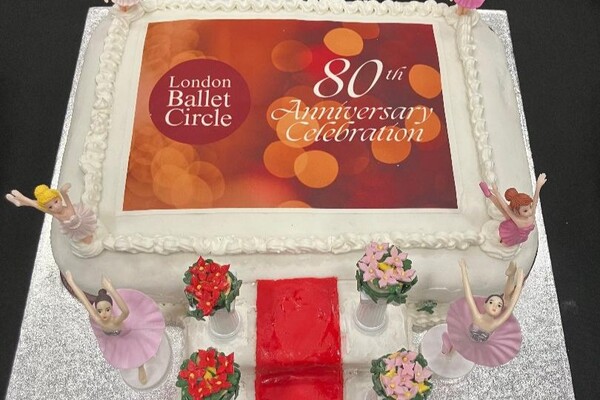
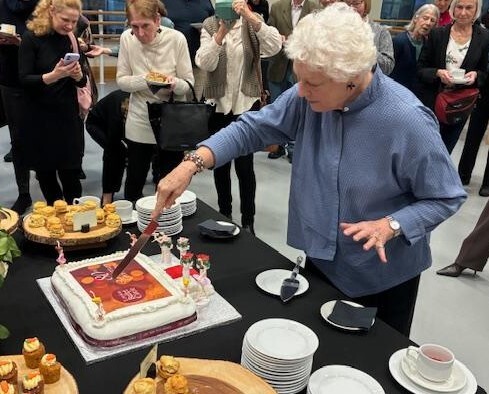
LONDON BALLET CIRCLE 80TH ANNIVERSARY
Royal Ballet School
Sunday 1st February 2026
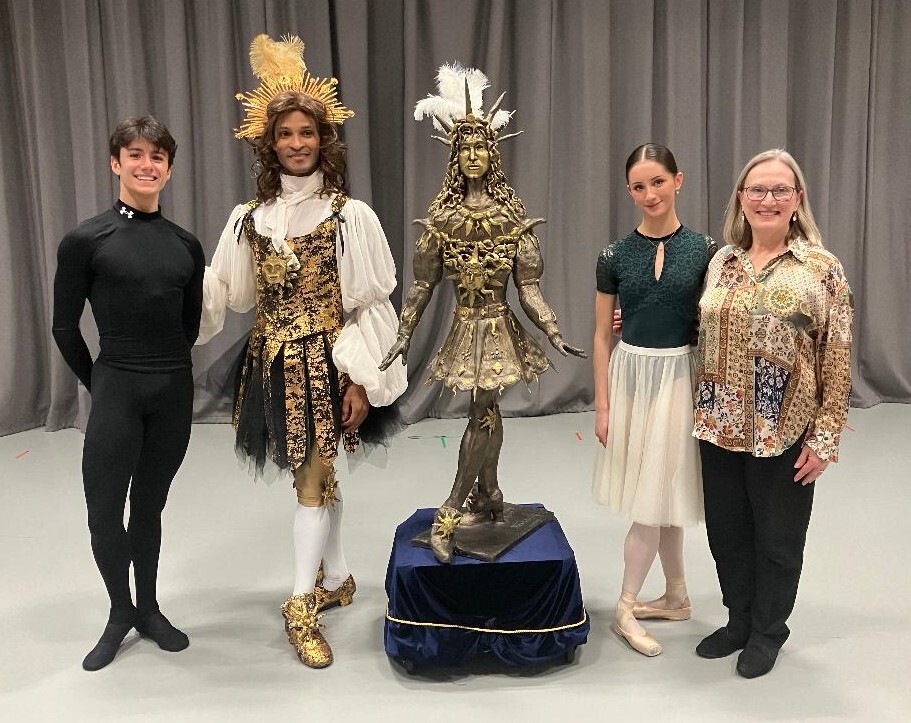
Susan Dalgetty-Ezra, Chair of the London Ballet Circle (LBC) commenced the celebration of its 80th Anniversary by welcoming speakers, dancers, and other guests to the Royal Ballet School. The afternoon would start with a presentation by historian Dr Anna Meadmore, Manager of Special Collections at the Royal Ballet School, on the origins of ballet as an art form. Her presentation would include demonstrations by former Royal Ballet dancer Fernando Montano and current members of the company Aurora Chinchilla and Caspar Lynch. The afternoon would end with refreshments.
Anna thanked the LBC for the invitation to speak on this highly significant occasion. She started her lecture by speaking about the origins of classical ballet in Italy and France during the Renaissance and then Baroque periods, illustrating her themes with a series of slides which have been summarised for this report.
The value of dance as a human activity has been recognised since the Middle Ages as important to all classes of society.
For instance, Guglielmo Ebreo of Pesaro (1420 – 1484) stated that ‘The character of everyone is made known by the dance’. He believed dancing to be an innate human activity which can become a specialist art, also stating that:
'When a musician plays and those dancing harmonise and measure their steps to the music, then it is an acquired skill’.
It is recognised that ballet in the theatre is actually a synthesis of
• Traditional folk dances - with their roots in ancient rural life and rituals
• Court dances of the nobility - with their origins in folk dances, in military and religious pageantry, and the European Renaissance
• Social dances - a synthesis of popular and courtly dances adapted by the aspiring middle-classes
During the fifteenth century in Italy, the ballo increasingly took the form of a narrative dance, which might:
‘enact themes of fidelity, fickleness or jealousy. Gelosia, (for instance) a ballo for three couples, is a dance in which the men constantly change partners, thereby providing many opportunities for the display of this emotion’
Also in Italy the Commedia dell’Arte – 'Italian Comedy' – the comic theatre of the people developed, having a complex genesis and built up from carnival rites and performances. Developed in opposition to the scripted comedies of the Renaissance. It was based on virtuoso improvisation and performed by professional entertainers, with universal characters of servants, old men, and lovers.
‘The action often has more significance than the words and sometimes involves the most daring and perilous acrobatics...the quips and sallies and the scurrilous plots contributed greatly...to the breaking down of barriers…’
It was in Italian Court Ballet that development of dance vocabulary and technique took place. Fabritio Caroso (c.1526 - c.1605),a dancing master based in Milan, produced in 1581 a text entitled Il Ballarino, adding a similar text for the female dancer in 1600. These described up to 74 different steps, each demanding considerable technical facility. Under Caroso, and also Cesare Negri, Milan became a major choreographic centre of Europe by the end of the sixteenth century.
The Renaissance was a period in which, particularly through mime and dance, individuals were enabled to express subversive views in a way that the Catholic Church – or the Dukes – would not allow to be said out loud. In this context dance assumed an important role with roaming groups of performers who developed complex skills and taught new tricks.
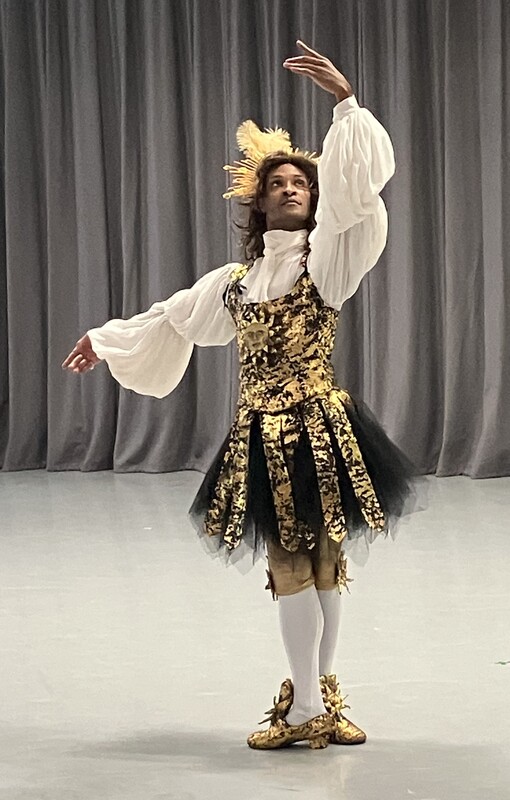
Due largely to the enormous wealth of the French court there was intermarriage between the French and Italian nobility and France began to import the Italian court spectacles – the dance, the music, the design. Costume could be expansive and spectacular, with much silk gold braid, all very heavy and not necessarily easy for dancing. Children of the nobility were expected to become proficient in music and dance among their other nascent talents.
In France important developments followed, particularly in the reign of Louis XIV (1638 - 1715) who was a great proponent of French art and culture. Louis was Renaissance man embodied in the person of 'le Roi Soleil' – The Sun King. Aged 15, he first appeared as the Sun in the allegorical spectacle, Le Ballet de la Nuit (1653).
He married Maria Theresa of Spain, who went on to arrange ballets in her apartments (in the Louvre Palace) in which Louis himself would take part, although it was left to his courtiers to perform the trickier spins and jumps…. His mastery of mind and body was much admired: it was manifest in his elegant posture and execution of complex steps and patterns. Louis brought a grandeur to ballet, which it retains today.
Just before and during his reign a number of Academies were started in France to enhance the prestige of the Court, including the Académie Royale de Danse (1661). Although this has been regarded as the ‘birthplace’ of ballet, history shows that dance as an activity had been recognised, and to some extent codified, well before this.
Pierre Beauchamps (1631 or 1636 - 1705?) was a professional dancer in the 'noble' style from a family of French dancers and musicians. A personal dancing master to Louis XIV for over 20 years, he was appointed 'superintendant of the King's ballets', in other words, his choreographer.
Beauchamps codified the fundamentals of ballet such as the five positions of the feet. He also created an elementary system of dance notation, published by Raoul-Auger Feuillet in 1700. In answer to an audience question Anna explained that over the years a number of different systems of notation had evolved; the Benesh system (Benesh Movement Notation) used by the Royal Ballet since c.1960 has the advantage of depicting graphically the positions the dancer should take, recording these on a ‘stave’ which is printed alongside the musical score.
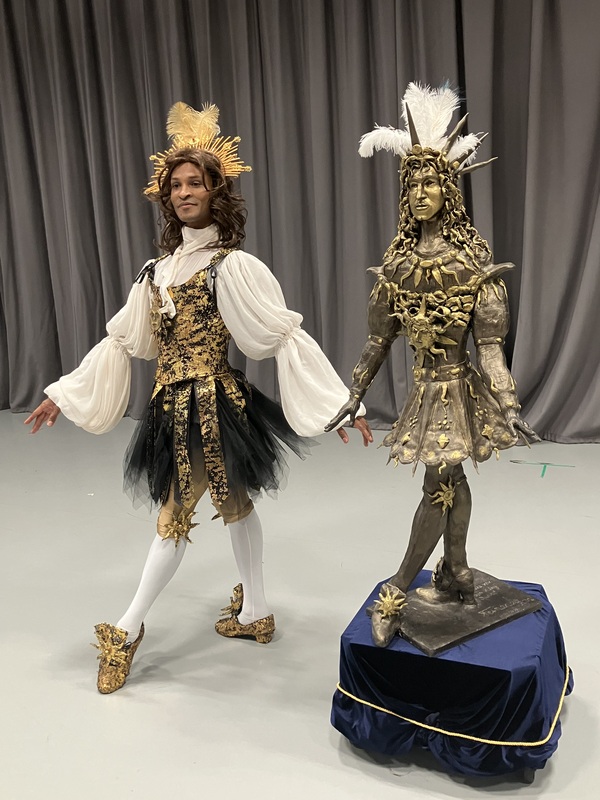
Another significant figure in the Baroque period was Jean-Baptise Lully (1632-87). Florentine by birth, he was a virtuoso violinist and comic dancer in the acrobatic burlesque tradition – a tradition enjoyed, but not performed by, the nobility. He was appointed Court Composer to Louis XIV and assumed charge of the Académie Royale de Musique (the official name of the Paris Opera) in 1672. Lully was responsible for moving the Opera away from its location at court to the Palais Royal and opening it up to the aspiring Parisian bourgeoisie.
Anna then introduced Fernando Montano, originally a soloist with the Royal Ballet and now an international artist, who spoke about and demonstrated styles and steps which would have been performed by dancers of the Louis XIV period.
- - - - - - - - - - - -
After Fernando’s contribution Anna went on to talk about Marie de Camargo (1710-70), a ballerina of the Paris Opera from the age of 16. A supreme technical innovator, Marie removed the heels from her shoes and shortened her skirts. At that time the convention was for female legs to always remain covered; she, however, believed it was necessary for the audience to see the dancer’s legs to appreciate the often difficult moves she was making. Marie extended her repertoire of steps to include some previously danced only by men.
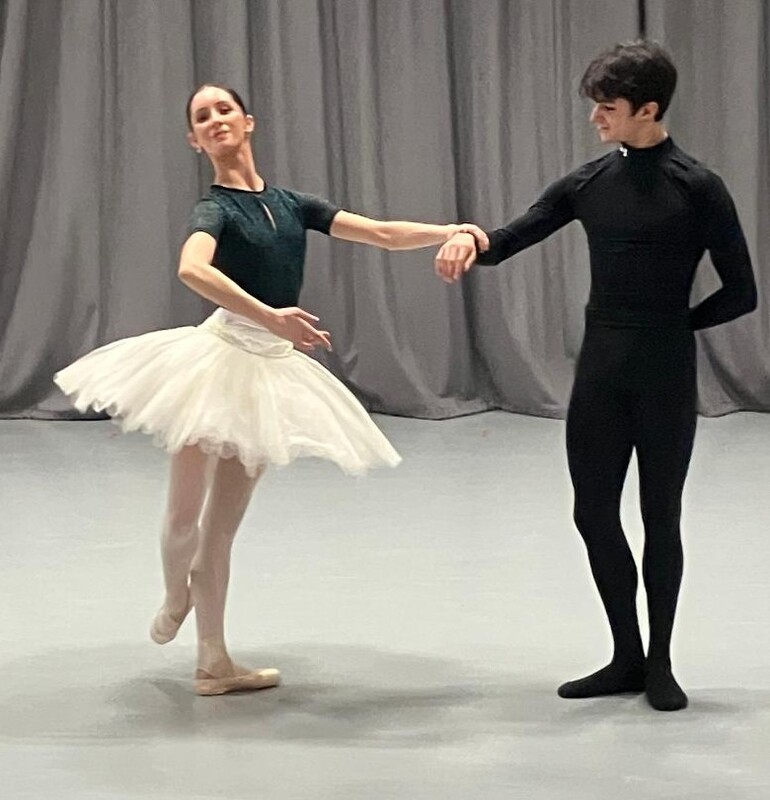
Then emerged the ballet d’action with Marie Sallé (1707-56) introducing less constraining costumes at the Paris Opera, which by then was the home of French ballet. It is said that she learnt much of her natural expressiveness from an English Harlequin, John Rich. And Pygmalion, most important of the ballets she arranged for herself was staged in London, at Covent Garden.
Jean-Georges Noverre (1727-1810), working across Stuttgart, London and Paris, established the ideals of the ballet d’action and published an influential treatise Lettres sur la danse et sur les ballets, prioritising dramatic motivation over technical virtuosity. In due course Noverre’s treatise was also published in Russia, influencing Charles-Louis Didelot who introduced to that country ‘the finest points of French technique as well as insisting on expressive acting’. Didelot established the ‘essential principles of the great St Petersburg style’.
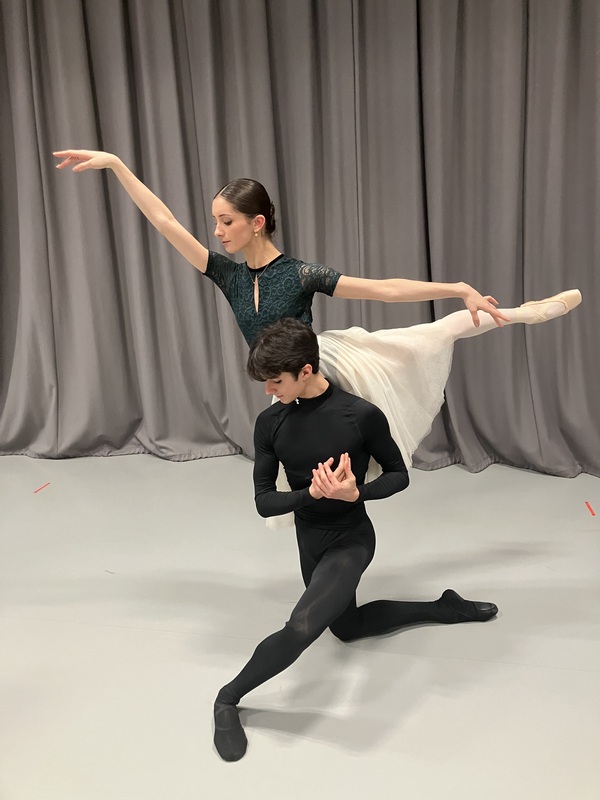
And then came Auguste Vestris (1760-1842), a huge star of the Paris Opera, also often performing in London and who Anna described as the Baryshnikov of his day. He led the shift from ballet d’action towards the iconic Romantic Era of ballet. With the development of pointework in the early 1800s, the aim of the ballerina was to appear weightless, as though she could simply take off and fly, and the increasing development of the pas de deux was often designed to show off this ability.
Meantime the Italian diaspora continued, for instance with Filippo Taglioni (1777-1871) who created one of the first Romantic ballets (La Sylphide in 1832) for his daughter, the ballerina Marie Taglioni (1804-84). It is said that she embodied the new feminine ideal in ballet.
‘Romantic ballet’s choreographic richness emphasised the language of line, extension and verticality…the radical new look of pointework and adagio…of effortlessly graceful feminine bodies dressed in tutus disguising increasingly strenuous technical virtuosity’.
Perhaps a suitable description of the ballerinas of today!
Anna went on to talk about and to discuss in detail many of the steps used in modern ballet, using the two Royal Ballet dancers Aurora Chinchilla and Caspar Lench to demonstrate the various positions of hands and feet. Fernando was also able to show how the steps had evolved from those employed in earlier years. They demonstrated individual steps and then a combination of movements in a short minuet sequence that had been devised by Ninette de Valois in 1947, for teachers to use in their lessons.
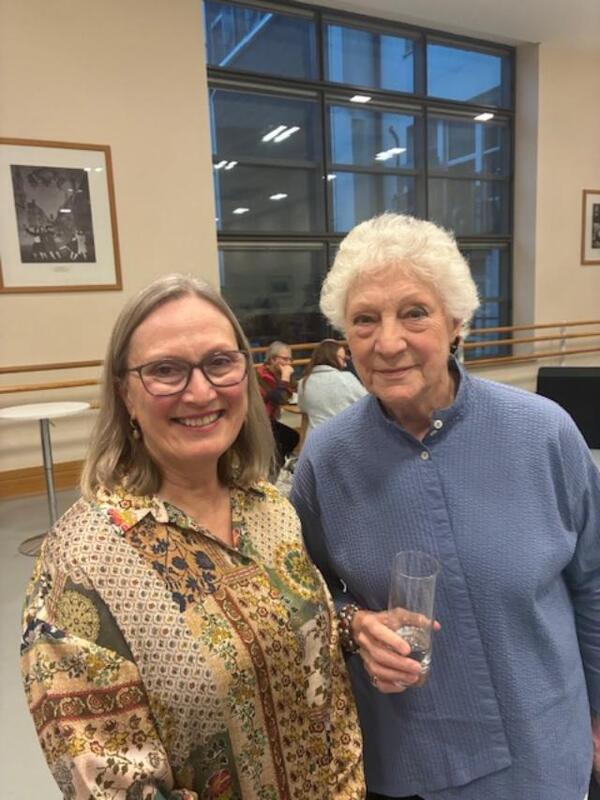
Susan thanked Anna for her extremely informative and interesting talk and also thanked most sincerely Fernando Montano and the two Royal Ballet dancers Aurora Chinchilla and Caspar Lench, all of whom had given up their Sunday afternoons to be our guests and had contributed most magnificently to the afternoon’s enjoyment. A fitting celebration of the LBC’s 80th anniversary!
Trevor Rothwell 04-02-26
Copyright @ The London Ballet Circle


